
Vice: Magic City Mayhem Beginner Guide
How to start Vice: Magic City Mayhem: get the katana, use the item slot, find early hearts and avoid the five mistakes that stall a first run.
Vice: Magic City Mayhem drops you into Downtown with three hearts, a katana and no explanation of how far the item system goes. The opening hour is generous once you know what to pick up. The wiki page→ has the release facts and the full structure; this page is the practical start.
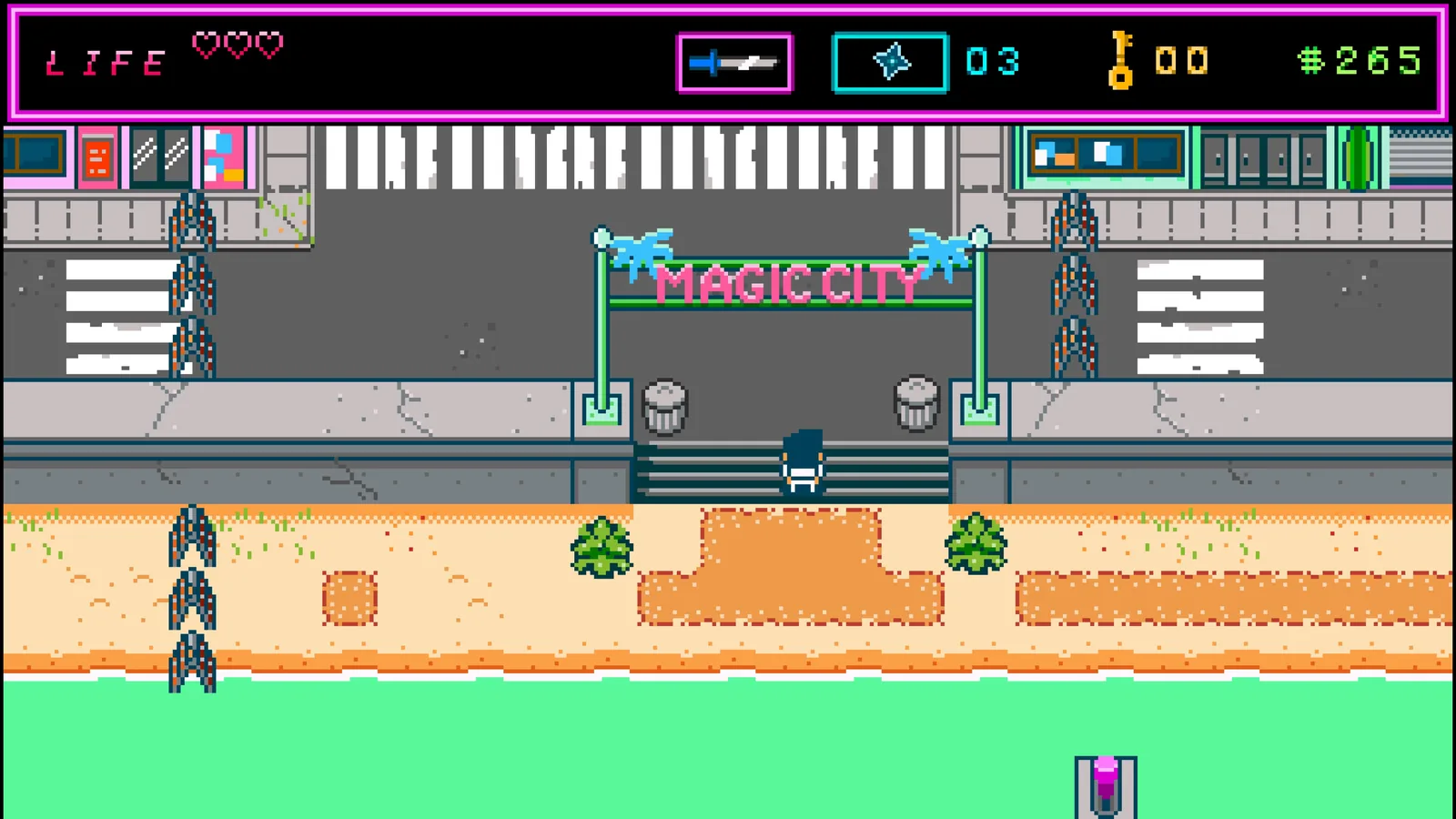
Fill the item slot before buying anything. A tool that solves a room is worth more than a small damage bump.
The first thirty minutes
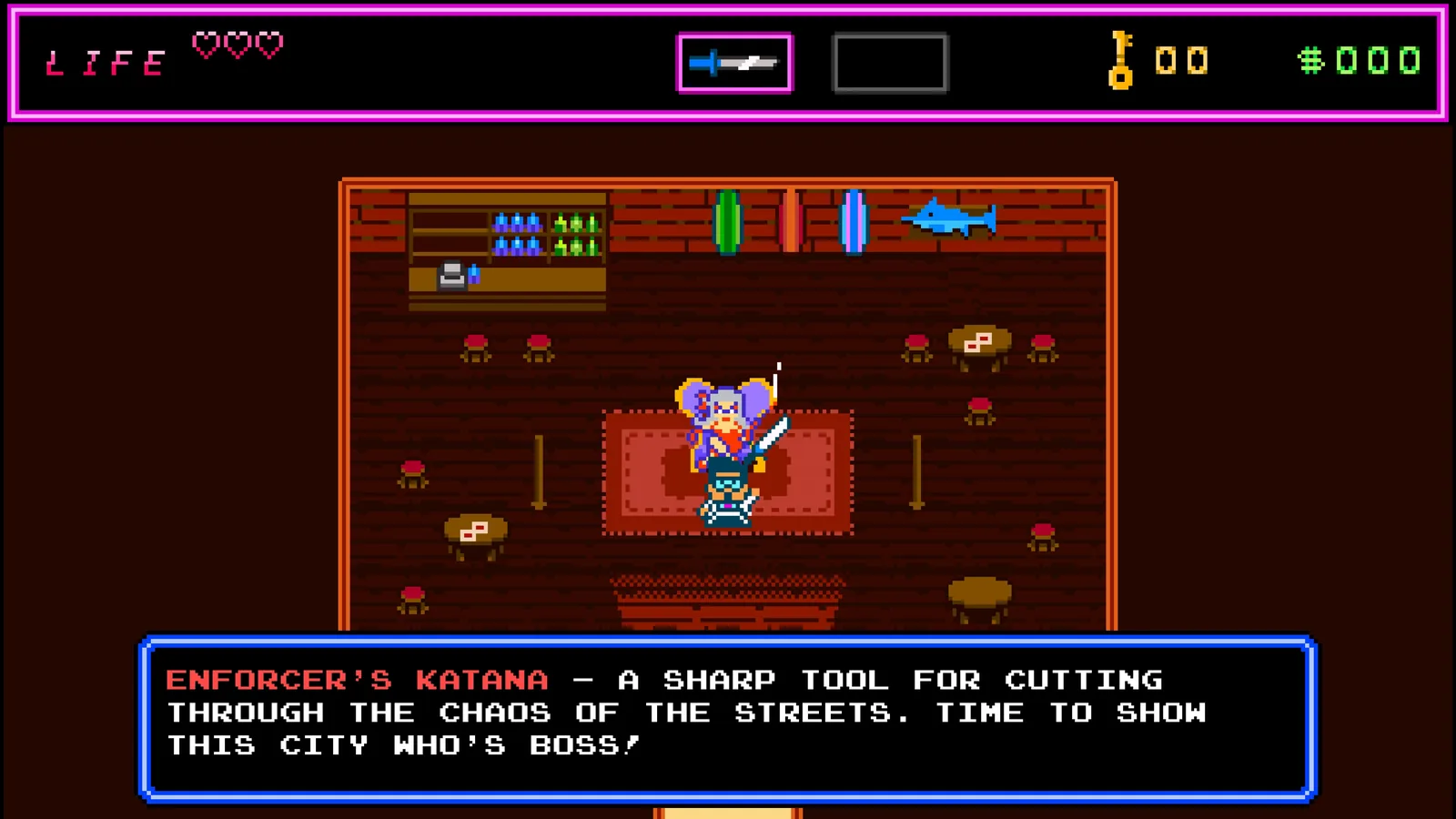
Your first job is to get the Enforcer's Katana. An early NPC gives it to you for free, and the pickup screen is the game's way of saying that the sword is the baseline, not a rare drop. Do not spend cash on a replacement before you have used this one for a few rooms.
The opening district teaches three things in sequence:
- Doors and keys. Keys are shown in the HUD as a two-digit counter. Check every room for a key before you pull a lever or open a gate.
- Breakable scenery. Crates, planters and street clutter hide cash, hearts and cards. The katana hits them without a separate button.
- Enemy tells. Most thugs wind up before they swing. One step back, then a counter-swing, works on nearly every early enemy.
The HUD also shows your current secondary item and its count. If the slot is empty, you have not found the district's item yet. That is usually a sign to explore the side rooms before the boss door.
The item slot is the build
Dutch equips a katana plus one secondary item. The game calls the second slot an item, but it works like a class: each one has a passive effect, and some can be upgraded. Swapping is free and instant, so there is no reason to treat one pick as permanent.
Early examples make the logic clear. Dash boots cover distance and get you out of a swing's reach. Kevlar vests reduce the cost of a mistake. Throwing stars give you a ranged answer to enemies that sit behind spikes. Dynamite clears a cluster, with the obvious risk of standing too close.
The best items page→ ranks the confirmed picks by how often they solve a room. The short version: dash boots and the vest carry a first run, while stars and dynamite are answers to specific layouts.
Hearts, cash and cards
Hearts are the health meter, and three is the starting cap. Heart containers are hidden in chests and side rooms, and the Full of Love trophy wants all of them. Pick up every heart you see even if the meter is full; the container is the permanent gain, not the refill.
Cash is tracked separately. You start at $000, and Cash Cow wants $999. Side rooms, breakables and optional fights all feed the counter. Do not treat cash as a score. It buys information, items and services at specific NPCs, and some of those prices are steep enough that early saving matters.
Trading cards are the third collectible. They come from exploration and trades, and Card Shark only unlocks when the set is complete. The collectibles hub→ tracks all three tracks without pretending there is a map marker for every card.
Official source: Steam store page ↗ for the feature list and item examples. Official source: Steam achievements ↗ for the global unlock rates quoted on this site. Official source: TrueTrophies ↗ for the PS5 trophy names.
A safe dungeon routine
Dungeons are where the game stops being a city sandbox and starts asking for routing. The routine that works:
- Clear the entrance loop first. Most dungeons put a key, a heart or a card in the rooms that branch off the entrance. Skip them on the way in and you will backtrack with half a heart.
- Find the district item before the boss door. The item is usually the answer to the boss's mechanic, not a bonus.
- Test the lever chain. If a room has a lever, a gate, a ladder and a blue door, they are one puzzle. Pull, climb, then check the blue door. The lever puzzle page→ covers the order and the known stuck-lever report.
- Leave the boss until the map is quiet. Boss rooms do not refill your hearts. Clean up the side rooms first.
The police dungeon and the pizza place are the two early examples people ask about. The police station sits northwest of the mega church, and the pizza place is the fifth dungeon. Both reward a slow first clear more than a fast one.
Five mistakes to skip
Treating the katana as the only weapon. The sword is reliable, but the item slot is where the game's answers live. An empty slot in a boss room means you missed something.
Ignoring the heart counter. Three hearts feels like a lot until the first spike room. If you are entering a new district with the starting cap, spend ten minutes on side rooms.
Pulling a lever before checking the room. Levers toggle gates. If you pull one and walk away, you may reopen a path you already cleared and lose track of which door is live.
Hoarding dynamite. It is for clusters and obstacle rooms, not for bosses with a single hitbox. Use it where it saves a heart.
Rushing the story. The main line is about eight hours. The game is not long enough that skipping side content saves you much time, and the item upgrades are the difference between a clean boss and a messy one.
FAQ
How do I get the katana in Vice: Magic City Mayhem? An early NPC gives you the Enforcer's Katana for free. It is part of the opening sequence, not a hidden pickup.
How many hearts should I have before the first boss? The starting three is workable, but one extra container makes the fight forgiving. Clear the side rooms around the dungeon entrance before you commit.
Can I respec items? There is no respec screen. Swapping the secondary item is free, so the practical answer is to change loadout per room rather than look for a reset.